
Ash handling system
An ash handling system, or ash handling plant, collects the ash left after coal is burnt in a boiler and moves it safely to storage, reuse or disposal.
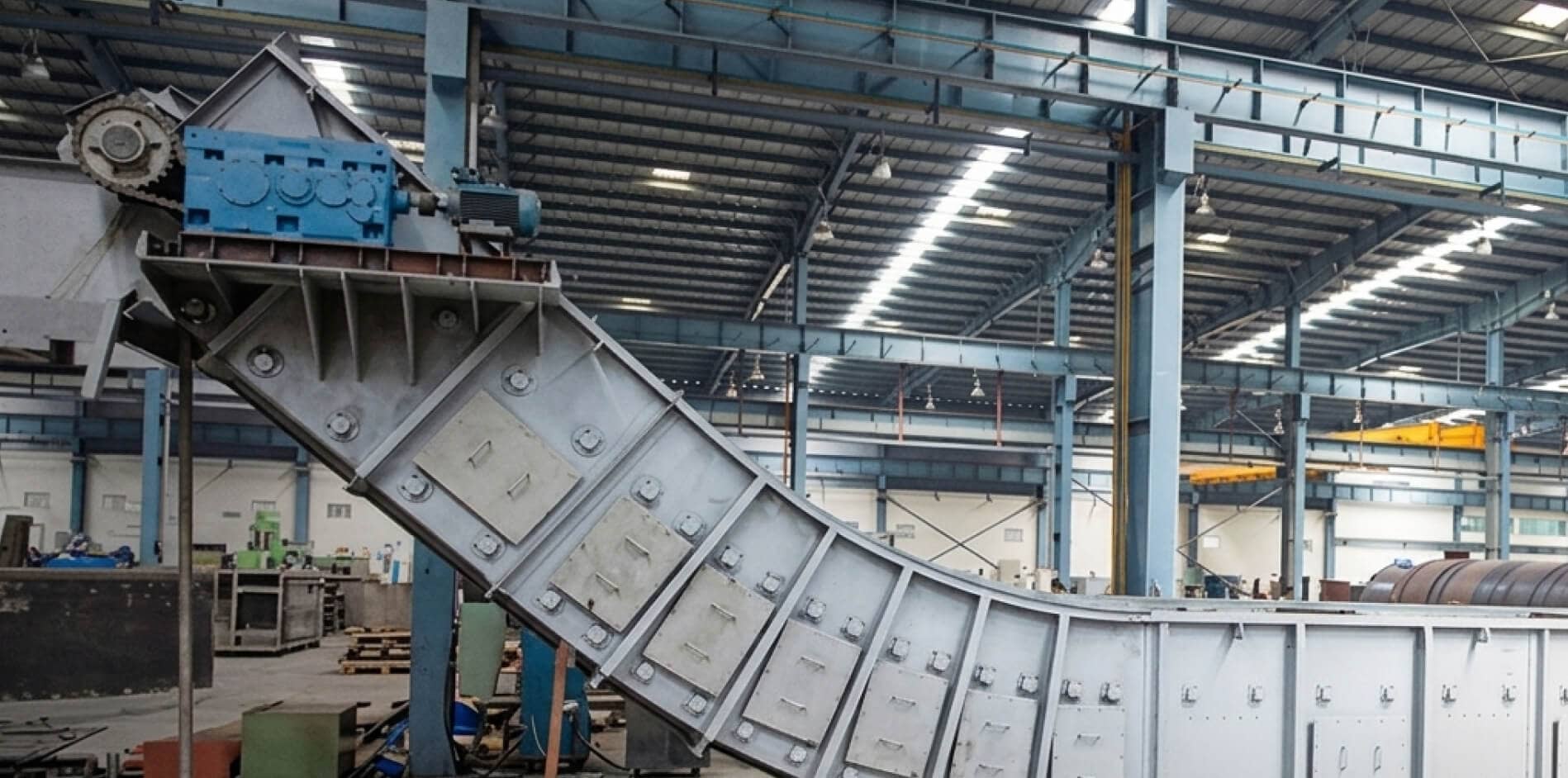

It covers fly ash from the economiser, air pre-heater and ESP hoppers, and bottom ash from below the furnace. Macawber Beekay was established in 1986 to pioneer dense phase pneumatic conveying in India; the family business behind it has worked on ash handling for thermal power plants since 1968.
What an ash handling plant does
Every coal-fired boiler produces ash in two places. Fine fly ash travels with the flue gas and is caught in the economiser, air pre-heater, duct and electrostatic precipitator (ESP) hoppers. Coarser bottom ash falls to the bottom of the furnace. In a pulverised fuel (PF) boiler about 80% of the ash is fly ash and about 20% is bottom ash.
Where the fly ash is caught
On its way from a PF boiler to the chimney, the flue gas passes the economiser, the air pre-heater, a run of duct and the electrostatic precipitator, and fly ash drops out at each one:
| Stage | What it does | Share of the fly ash caught there (typical) |
|---|---|---|
| Economiser | Uses the heat of the flue gas to warm the boiler feed water | About 2.5% |
| Air pre-heater (APH) | Uses the remaining heat to warm the combustion air | About 2.5% |
| Duct | Carries the gas on to the precipitator | About 1% |
| Electrostatic precipitator (ESP) | Charges the ash particles electrically and collects them on its plates | The balance, the great majority |
What leaves the ESP has to meet the environmental emission limits, so every one of these hopper groups needs a reliable way to empty, which is the job of the fly ash handling system.
An ash handling plant takes both streams through the same sequence:
- Collection at the hoppers below the furnace, economiser, air pre-heater and ESP.
- Conveying pneumatically, hydraulically or mechanically.
- Storage in fly ash and bottom ash silos.
- Out-loading, dry into tankers for reuse, or wet as conditioned ash or slurry for disposal.
Macawber Beekay designs, manufactures, supplies, erects and commissions complete ash handling plants, with projects for power plants up to 1000 MW.
The parts of an ash handling system
Fly ash handling
Dry fly ash is drawn from the ESP, air pre-heater and economiser hoppers by a fly ash handling system. Macawber Beekay builds dense phase pneumatic conveying under positive pressure, and vacuum systems with a second pressure stage, both sealed at the hopper by the Dome Valve.
Bottom ash handling
A bottom ash handling system removes ash and clinker from below the furnace. In a jet pump system, a water-impounded, refractory-lined bottom ash hopper with a water seal trough and dip plates lets the furnace expand freely without air ingress. Hydraulic feed gates, clinker crushers and jet pumps discharge the ash as slurry to dewatering bins or a slurry sump.
Bottom ash is handled in one of three ways:
- Wet (slurry): impounded bottom ash hopper, feed gates, clinker grinder and jet pump, discharging to an ash pond or dewatering bins.
- Semi-dry: a submerged scraper chain conveyor (SSCC) under the bottom ash hopper, with isolation gates, a clinker grinder and a mechanical belt conveying system, discharging to trucks.
- Dry: no water at all. Isolation gates, an optional clinker crusher, a mechanical conveyor and a clinker grinder, discharging to trucks.
Dry bottom ash handling
DryAshTech is a dry conveyor that cools and carries bottom ash from below the furnace with no water, removing the need for a bottom ash cooling water system, effluent treatment and an ash pond for that stream.
Ash slurry disposal
Where ash goes to a pond or disposal area, an ash slurry disposal system pumps it there. Lean slurry systems use centrifugal slurry pumps with ash water recovery; high concentration slurry disposal (HCSD) pumps ash at about 60% concentration, so very little water is used or released.
Types of ash handling system Macawber Beekay builds
| System | Ash stream | How it works | Water use |
|---|---|---|---|
| Dense phase pressure conveying | Fly ash, CFBC bed ash | Conveying vessels with Dome Valves push ash through pipelines to silos at low velocity | None for conveying |
| Vacuum conveying with pressure second stage | Fly ash | Vacuum pumps draw ash to an intermediate surge hopper; a pressure stage conveys it to the silos | None for conveying |
| Jet pump system | Bottom ash | Ash is quenched in a water-impounded hopper and pumped as slurry by high pressure motive water | High |
| Submerged scraper chain conveyor (SSCC) | Bottom ash | Ash is quenched in a water bath, dragged out continuously by scraper chains and dewatered | Moderate |
| DryAshTech dry conveyor | Bottom ash | Ash is cooled and conveyed dry on a chain-driven conveyor of profiled belt elements below the furnace | None |
| Lean slurry disposal with ash water recovery | Fly ash and bottom ash | Centrifugal slurry pumps carry dilute slurry to the ash pond; water is recovered and returned | High, partly recovered |
| High concentration slurry disposal (HCSD) | Fly ash and bottom ash | Ash is mixed in an agitator retention tank and pumped at about 60% concentration by piston diaphragm pumps | Low |
Ash handling by boiler type
Pulverised fuel (PF) boilers
PF boilers produce mostly fly ash, collected in many ESP hoppers, with bottom ash removed intermittently or continuously from the furnace bottom. Typical Macawber Beekay arrangements include a jet pump bottom ash system with vacuum and pressure fly ash conveying, as on a 2×520 MW plant, or an SSCC bottom ash system with dense phase fly ash conveying and HCSD, as on a 2×600 MW plant.
CFBC and AFBC boilers
In circulating and atmospheric fluidised bed boilers, bed ash is coarse, hot, abrasive and produced continuously. A chain conveyor collects cooled bed ash and transfers it to a surge hopper, from where dense phase pneumatic conveying carries it through an enclosed pipeline to the bed ash silo. Where headspace under the boiler is limited, a mechanical dry bottom ash system is suitable. Fly ash from the ESP is conveyed by dense phase to the fly ash silo.
Related systems
- Coal mill rejects handling by dense phase pneumatic conveying
- Ship and barge loading for exporting fly ash from coastal plants
- Mine void filling with ash slurry
- Dome Valve, the sealing valve at the heart of our pneumatic systems
- Spare parts and operations and maintenance for installed plants
Further reading
- Ash handling project references for NTPC and state power utilities: 67 projects, 55 commissioned and 12 under execution, with capacities and dates
- What are the different types of ash handling system?
- Ash handling system in a thermal power plant
- Ash handling systems for various types of boilers
- Ash handling system for an 800 MW power plant
- Case study: bed ash, fly ash and bed material handling for a CFBC boiler
Last reviewed
Talk to our engineers
Our team in Noida answers enquiries on ash handling.
Get in touch+91 120 450 7700On site and in the works
Questions buyers ask
What is an ash handling plant?
An ash handling plant is the set of systems in a coal-fired power station that removes ash from the boiler and delivers it to storage, reuse or disposal. It handles two streams: fine fly ash collected in the economiser, air pre-heater, duct and ESP hoppers, and coarse bottom ash that falls to the furnace bottom. Silos, slurry pumps and disposal pipelines complete the plant.
What are the main types of ash handling system?
Ash is conveyed pneumatically, hydraulically or mechanically. Macawber Beekay builds dense phase pressure and vacuum systems for fly ash; jet pump, submerged scraper chain conveyor (SSCC) and dry conveyor systems for bottom ash; dense phase systems for CFBC bed ash; and lean slurry or high concentration slurry disposal (HCSD) systems to carry ash to the disposal area.
How do you choose an ash handling system?
The choice depends on boiler type, ash characteristics, water availability, space below the furnace, conveying distance, plant layout and whether the ash will be reused or disposed of. A PF boiler may use a jet pump or SSCC for bottom ash with pneumatic fly ash conveying; a CFBC boiler can use mechanical collection and dense phase conveying of bed ash.
How much of the ash in a thermal power plant is fly ash?
In a pulverised fuel (PF) boiler about 80% of the ash generated is fly ash, carried with the flue gas and caught in the economiser, air pre-heater and ESP hoppers. The remaining 20% or so is bottom ash, which falls to the bottom of the furnace and is removed by the bottom ash handling system.
Explore related systems.
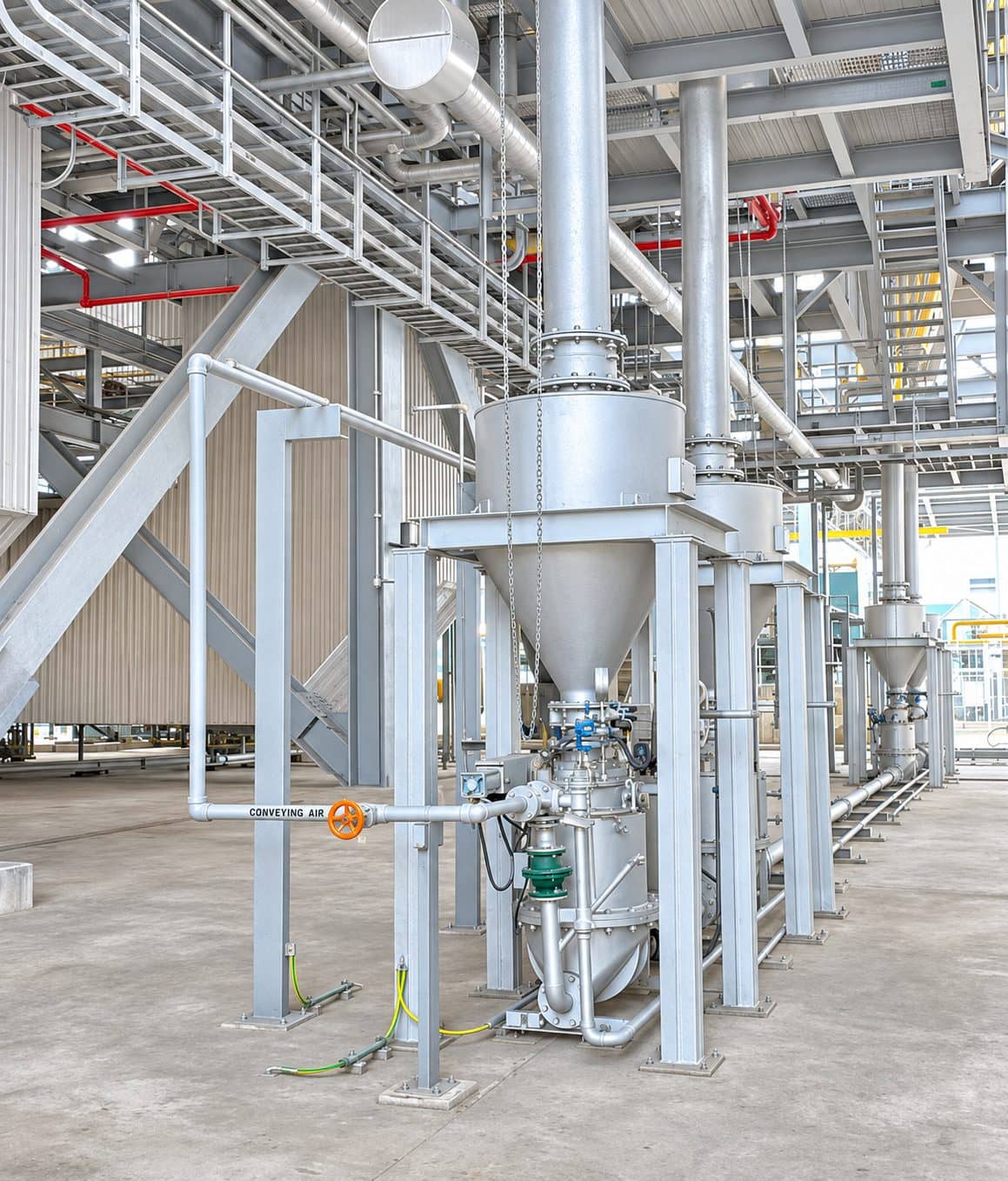 Fly ash handlingFly ash handling systems that convey dry fly ash from ESP, APH and economiser hoppers to silos by dense phase pressure or vacuum conveying, with Dome Valves.
 Bottom ash handlingBottom ash handling systems for PF and CFBC boilers: jet pump, submerged scraper chain conveyor (SSCC), dry and dense phase systems by Macawber Beekay.
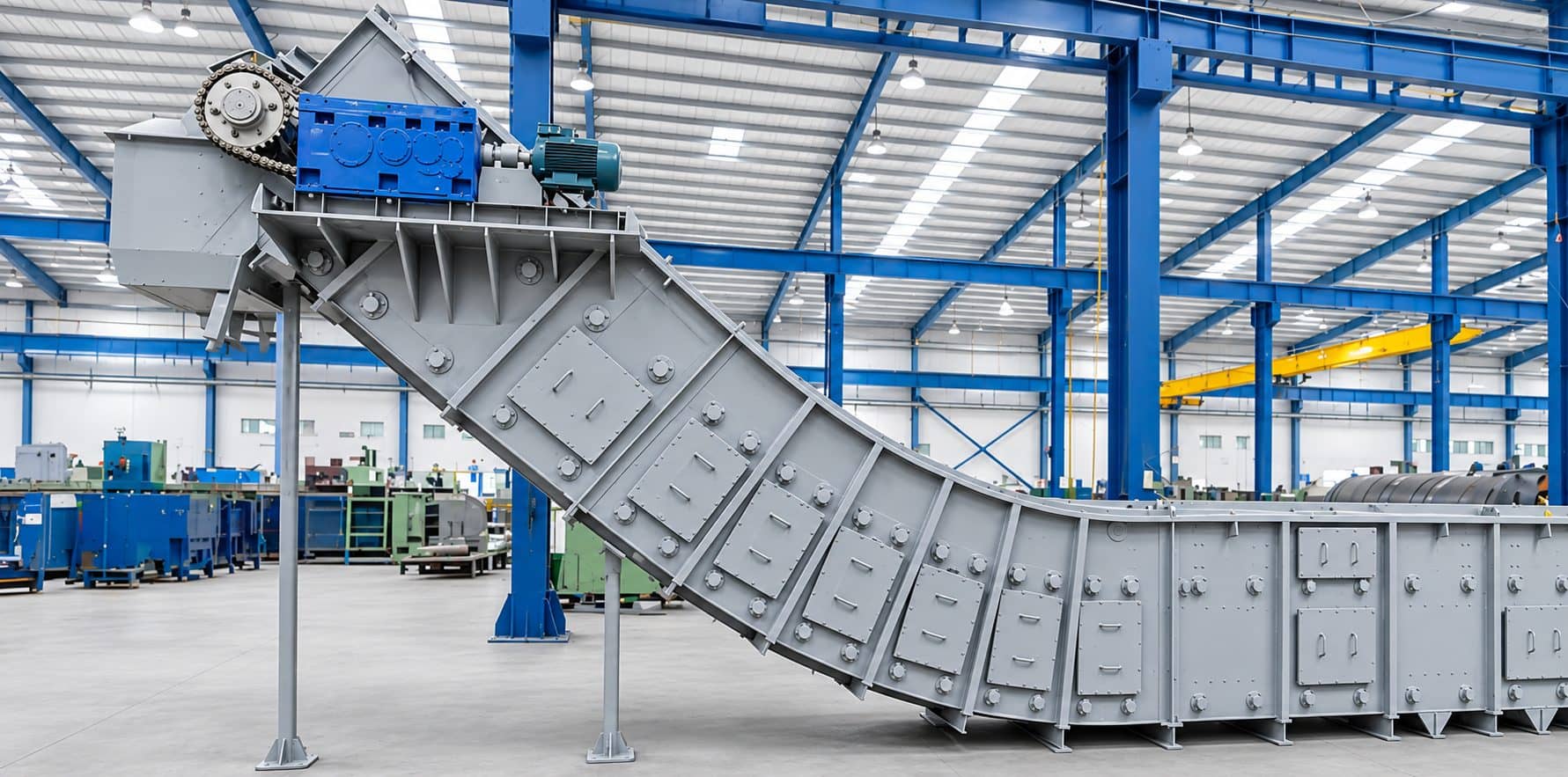 Dry Ash TechDryAshTech dry bottom ash conveyor cools and conveys boiler bottom ash without water: no ash pond, usable dry ash, over 100 t/h and over 1000 °C resistance.
 Ash slurry disposalAsh slurry disposal systems: lean slurry with ash water recovery, and high concentration slurry disposal (HCSD) at about 60% concentration, up to 17 km.
Talk to our engineers.
Planning an ash handling project, or upgrading one? Our engineering team in Noida is ready to help.
