
Glossary
This glossary defines the technical terms used across the Macawber Beekay site, from ash handling (ESP, dense phase conveying, HCSD, SSCC) to coal handling (wagon tippler, stacker-cum-reclaimer) and green energy (green coal, torrefaction, electrolyzer).
Each definition follows how our own system pages use the term and links to the page that covers it in detail.
A
Agitator retention tank (ART)
The tank in a high concentration slurry disposal system where fly ash and bottom ash are mixed homogeneously with water to a preset concentration before pumping. Red mud disposal systems use an ART in the same way to soften the mud before it is pumped to the pond.
Air pre-heater (APH)
One of the boiler sections at the furnace outlet, ahead of the induced draft fan, whose hoppers collect part of the fly ash. In a fly ash handling system, conveying vessels or vacuum lines take ash from the APH hoppers along with the economiser, duct and ESP hoppers.
Ash conditioner
Equipment at a silo outlet used for moist ash disposal into open trucks. In the CFBC boiler case study, the bed ash and fly ash silos each have unloading spouts for dry ash and an ash conditioner outlet.
Ash handling system (ash handling plant)
The plant that collects the ash a coal-fired boiler produces and conveys it to storage, reuse or disposal, covering both fly ash and bottom ash. See ash handling system.
Ash water recovery system (AWRS)
The system that recovers ash water from the ash slurry pond, using a clariflocculator or tube settler. It is offered with lean slurry disposal.
B
Bed ash
The ash discharged from the bed of a CFBC or AFBC fluidised bed boiler. Unlike the bottom ash of a PF boiler it is generally sand-like, coarser, hotter when discharged and produced continuously; cooled bed ash can be conveyed by dense phase pneumatic conveying to a bed ash silo.
Bottom ash
The coarse ash that falls to the bottom of the boiler furnace instead of leaving with the flue gas, roughly 20% of the total ash from a coal-fired boiler. See bottom ash handling system.
C
CFBC boiler
A circulating fluidised bed combustion boiler, in which fuel burns in a bed of suspended particles and flue gas is recirculated to capture unburnt carbon. It produces bed ash and fly ash, both of which Macawber Beekay handles pneumatically; see the CFBC ash handling article.
Clinker crusher
A crusher below the bottom ash hopper or at the end of a submerged scraper chain conveyor that breaks clinkers into a size that can be conveyed. See bottom ash handling system.
Coal handling plant (CHP)
The plant that unloads, crushes, screens, conveys, stacks, reclaims and feeds coal to the boiler bunkers. See coal handling system.
Coal mill rejects
Non-grindable material separated from coal in the pulveriser, such as iron pyrites, tramp metal and stones. They collect in a pyrite hopper below each mill and are conveyed to a rejects bunker; see coal mill rejects handling.
Conveying vessel
The sealed pressure vessel at the heart of a dense phase system. It fills with material through a Dome Valve, the valve closes and seals, and compressed air then pushes the batch through the pipeline. See fly ash handling system.
D
Dense phase pneumatic conveying
Conveying bulk material through a pipeline with compressed air at high pressure and low velocity, in batches from a conveying vessel. Low velocity reduces pipe wear and allows long conveying distances. Macawber Beekay introduced it to India in 1986; see bulk material handling.
Denseveyor
Macawber Beekay's proprietary dense phase pneumatic conveying system for difficult-to-handle materials, used notably for coal mill rejects.
Dome Valve
Macawber Beekay's valve for abrasive bulk solids. It opens full bore, cuts through a moving or static column of material when closing, and seals with an inflatable seal that inflates only after the dome has closed. See Dome Valve.
DryAshTech
Macawber Beekay's dry bottom ash conveyor that cools and conveys combustion residues below the boiler furnace without water, eliminating the bottom ash cooling water system and ash pond for that stream. See DryAshTech.
E
Economiser
One of the boiler sections at the furnace outlet, ahead of the induced draft fan, whose hoppers collect part of the fly ash. Economiser ash is conveyed with the fly ash, or in some layouts flows into the bottom ash system, as in the jet pump case study.
Electrolyzer
A system that uses electricity to split water into hydrogen and oxygen. When the electricity comes from renewable sources such as solar or wind, the product is green hydrogen. See electrolyzer and green hydrogen.
Electrostatic precipitator (ESP)
The device that removes fly ash from the flue gas. An ESP has multiple fields, passes and hoppers, and the fly ash handling system extracts ash from its hoppers.
F
Flue gas desulphurisation (FGD)
The process of removing sulphur dioxide from flue gas. In a wet FGD plant, limestone neutralises the acid formed in the scrubber and produces gypsum, so limestone and gypsum handling are integral to the plant. See conveyor package for FGD.
Fly ash
The fine, powdery ash carried away in the flue gas and caught in the economiser, air pre-heater, duct and ESP hoppers, about 80% of the ash from a pulverised fuel boiler. See fly ash handling system.
G
Green coal
A coal substitute made from municipal solid waste by torrefaction, then pelletised for co-firing in boilers or for use in place of coal or wood in industry. Macawber Beekay's plants convert up to 600 T/day of waste; see waste to green coal.
Gypsum
Calcium sulphate, the main end product of a limestone-based wet FGD plant, sold to plasterboard and plaster manufacturers. See conveyor package for FGD.
H
High concentration slurry disposal (HCSD)
Ash disposal at a solids concentration of about 60%, mixed in an agitator retention tank and pumped by piston diaphragm pumps. It uses far less water and land than lean slurry, and literally no water is released at the disposal area. See ash slurry disposal system.
I
Intermediate surge hopper (ISH)
The buffer hopper near the ESP that receives fly ash from the first, vacuum stage of a two-stage system; a positive pressure stage then conveys it to the main silos. See fly ash handling system.
J
Jet pump
A pump that uses high-pressure motive water to carry bottom ash as slurry from the bottom ash hopper to dewatering bins or a slurry sump. It is the basis of the wet jet pumping bottom ash system; see bottom ash handling system.
L
Lean phase conveying
Pneumatic conveying at low pressure and high air velocity, with material carried in suspension; also called dilute phase. Vacuum fly ash systems are generally lean phase. See bulk material handling.
Lean slurry disposal
The conventional way of pumping ash to a pond as a dilute slurry, typically 10-40% solids, with centrifugal slurry pumps, usually paired with an ash water recovery system. See ash slurry disposal system.
M
Mine void filling
Refilling a mine with ash from a coal-based power plant, pumped as lean or high concentration slurry, with ash water recirculated back to the plant. See mine void filling system.
Municipal solid waste (MSW)
Household, institutional and commercial garbage collected by municipal bodies. It is the feedstock for Macawber Beekay's green coal process.
P
PF boiler
A pulverised fuel boiler, which burns finely ground coal. About 80% of its ash is fly ash and the rest bottom ash; it is the boiler type served by Macawber Beekay's fly ash and jet pump bottom ash systems.
R
Red mud
Bauxite residue, collected from drum filters or from mud washers and thickeners and pumped, as softened slurry or directly, to a red mud pond by piston diaphragm or centrifugal pumps. See red mud handling.
S
Segregated combustible fraction (SCF)
The energy-rich part of municipal solid waste, such as paper, plastics and wood, left after inert material is removed and the waste is shredded. SCF is the material fed to the reactor in the green coal process.
Stacker-cum-reclaimer
A stockyard machine that stacks incoming coal into planned piles and reclaims it back onto the conveyors when needed, letting the yard buffer deliveries against boiler demand. See coal handling system.
Submerged scraper chain conveyor (SSCC)
A semi-dry bottom ash system in which hot ash falls into a water-filled trough and is dragged out continuously by scraper bars on endless chains, dewatering on an inclined section. See the SSCC case study.
T
Torrefaction
A thermochemical treatment carried out in an oxygen-deficient zone at preset temperature and pressure. In the green coal process it turns the segregated combustible fraction into charcoal with higher energy density and better grindability.
Track hopper
An elongated reinforced-concrete hopper beneath the railway track that receives coal from bottom-discharge wagons, with feeders below drawing it out at a regulated rate. See coal handling system.
V
Vacuum conveying
Pneumatic conveying in which vacuum pumps draw material into the pipeline. It suits extracting fly ash from many ESP hoppers over short distances, often as the first stage of a two-stage system. See fly ash handling system.
W
Wagon tippler
Unloading equipment that secures a box-type railway wagon and rotates it so the coal falls into a receiving hopper below. It is used for wagons that cannot discharge through bottom doors; see coal handling system.
Last reviewed
Talk to our engineers
Our team in Noida answers enquiries on every system we build.
Get in touch+91 120 450 7700Continue reading.
- Questions answeredStraight answers on ash handling plants, fly and bottom ash, dense phase conveying, HCSD, coal handling, the Dome Valve, green coal and Macawber Beekay.
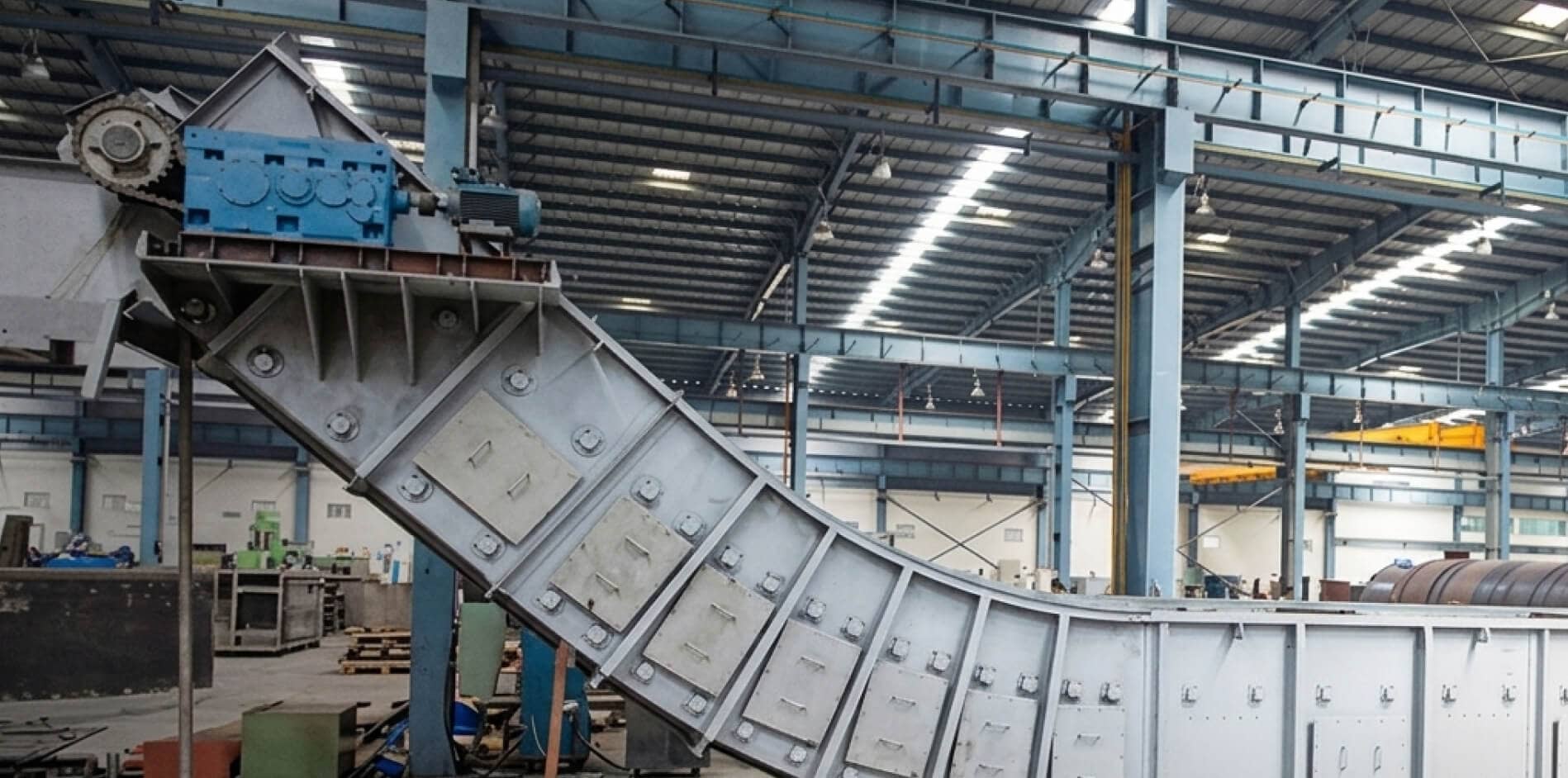 Ash handlingAsh handling systems and plants for PF and CFBC boilers: fly ash, bottom ash, dry bottom ash and slurry disposal, designed and built by Macawber Beekay.
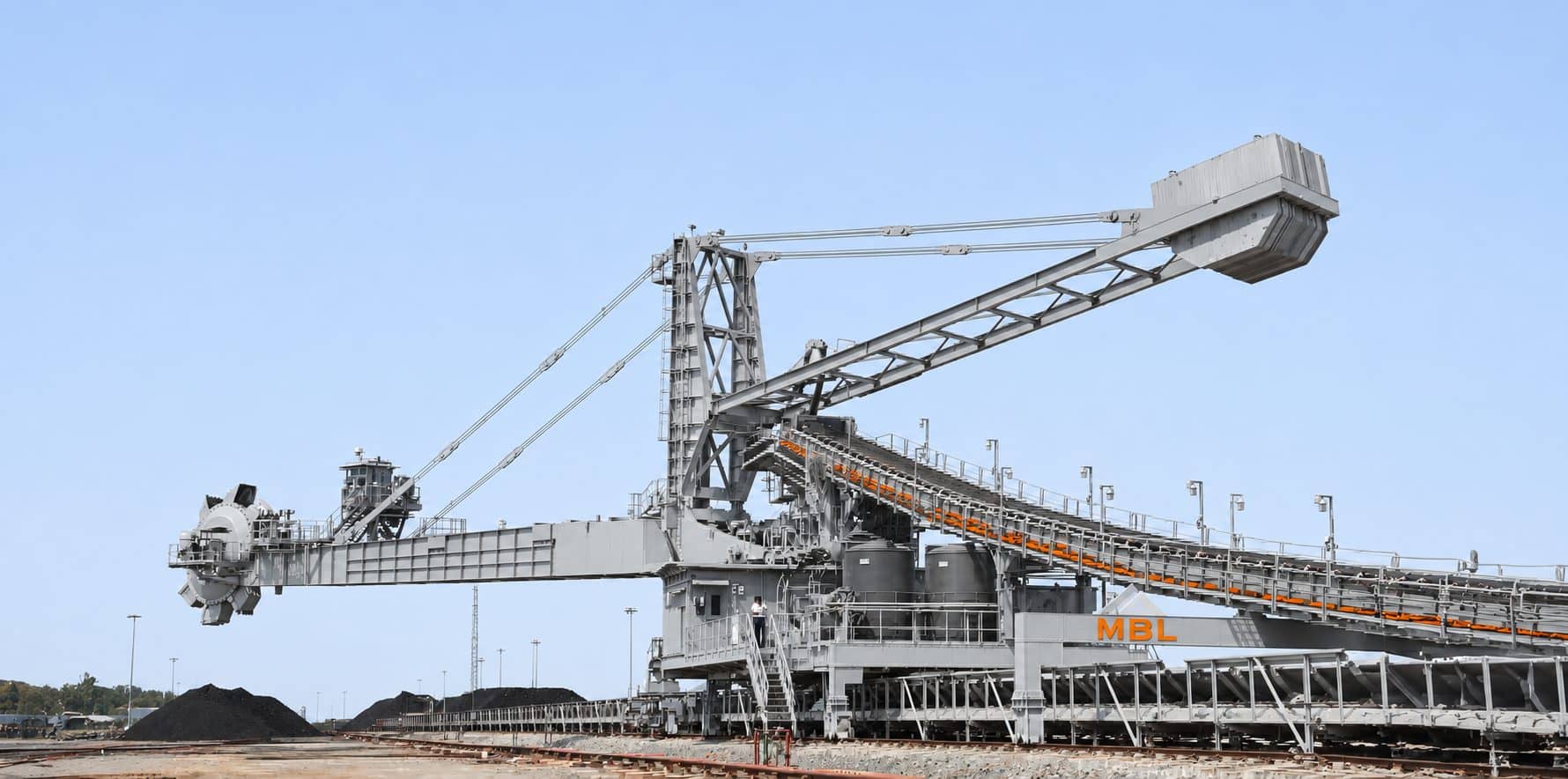 Coal handlingTurnkey coal and lime handling plants: wagon tipplers, track hoppers, feeders, crushers, screens, stacker-reclaimers, and civil, structural, electrical works.
 Green coalWaste to green coal: Macawber Beekay turns municipal solid waste into carbon-neutral green coal by torrefaction, with capacity of up to 600 T/day of waste.
Talk to our engineers.
Planning a new plant or upgrading one? Our engineering team in Noida is ready to help.
