
Questions answered
This page answers the questions buyers and engineers most often ask about ash handling plants, coal handling plants, slurry disposal, dense phase pneumatic conveying, the Dome Valve and green coal.
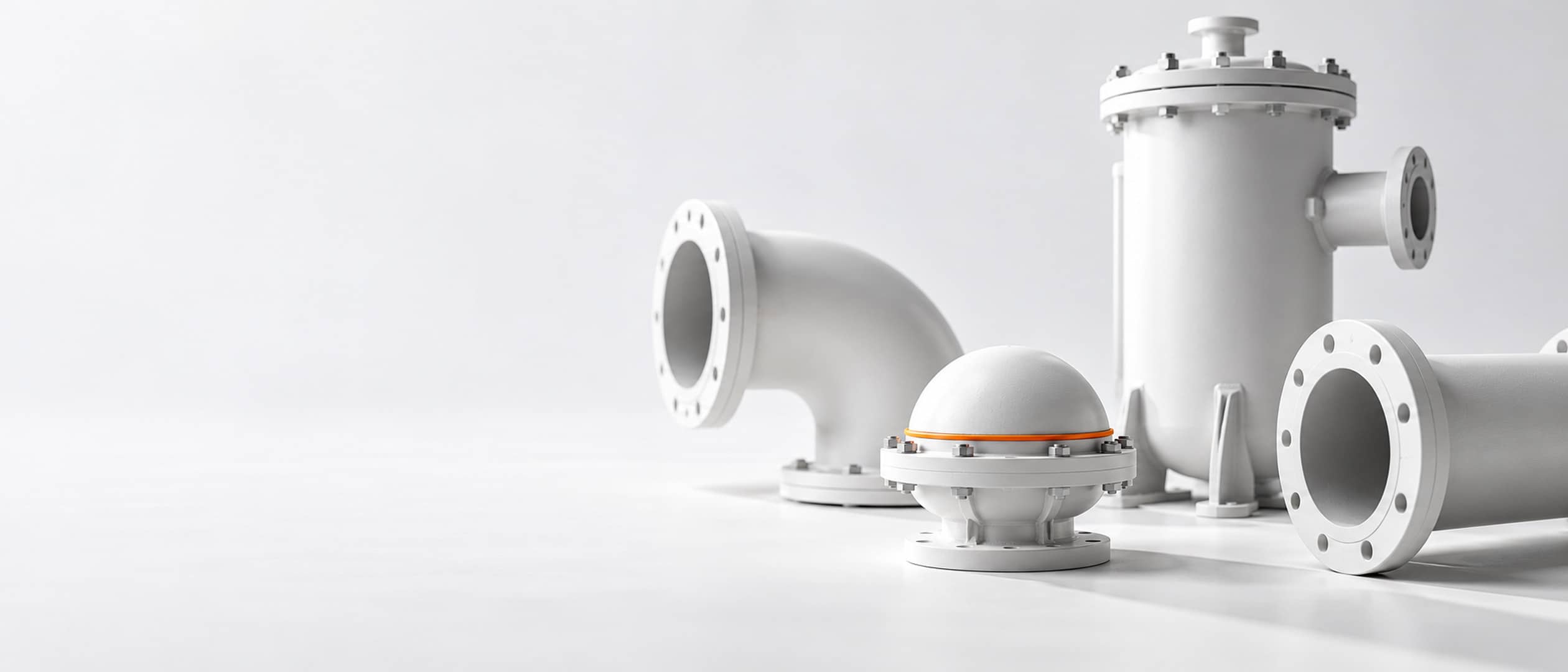
Every answer comes from Macawber Beekay's own system pages, case studies and articles, so it reflects the equipment we design, manufacture and commission rather than generic theory.
Engineers comparing conveying technologies and buyers preparing a tender tend to ask the same questions. The answers below are short and self-contained; for full specifications, process steps and photographs, follow the links to the system pages, case studies and articles listed under each topic.
Browse by topic
- Ash handling plants: Ash handling system, types of ash handling systems, ash handling for an 800 MW power plant, ash handling systems for different boiler types
- Fly ash handling: Fly ash handling system, vacuum vs positive pressure conveying, two-stage ash handling for large utility boilers, ship and barge loading for fly ash export
- Bottom ash handling: Bottom ash handling system, DryAshTech dry bottom ash handling, types of bottom ash handling systems, bed ash and fly ash handling for CFBC boilers
- Slurry disposal: Ash slurry disposal system, lean slurry vs HCSD, mine void filling system, red mud handling
- Dense phase conveying and the Dome Valve: Dome Valve, how a Dome Valve works, bulk material handling, handling difficult materials by pneumatic conveying
- Coal handling: Coal handling system, coal handling plant EPC for power plants, coal mill rejects handling, conveyor package for FGD
- Case studies: SSCC bottom ash and dense phase fly ash for a PF boiler, jet pump bottom ash and vacuum fly ash for a PF boiler, bed ash and fly ash for a CFBC boiler, coal mill rejects for a PF boiler
- Green energy: Waste to green coal, green coal process and technology, turning municipal solid waste into green coal, electrolyzers and green hydrogen
- The company: About Macawber Beekay, operations and maintenance, spare parts, careers
- Terms explained: Glossary of ash and coal handling terms
Last reviewed
Talk to our engineers
Our team in Noida answers enquiries on every system we build.
Get in touch+91 120 450 7700Questions buyers ask
What is an ash handling system?
An ash handling system, or ash handling plant, collects the ash a boiler produces when it burns coal and moves it to storage, reuse or disposal. In a thermal power plant it covers fly ash from the economiser, air pre-heater, duct and ESP hoppers and bottom ash from the furnace bottom, and it disposes of ash in dry form, as lean slurry or as high concentration slurry.
What is the difference between fly ash and bottom ash?
Fly ash is the fine, powdery residue carried away in the flue gas and caught in the economiser, air pre-heater, duct and ESP hoppers. Bottom ash is the coarser ash that falls to the bottom of the furnace. In a typical coal-fired boiler about 80% of the ash is fly ash and about 20% is bottom ash, so each stream gets its own handling system.
How is fly ash conveyed from ESP hoppers to the silo?
Macawber Beekay uses two methods for PF boilers. A vacuum system, chosen when the extraction distance is short and ESP hoppers are many, draws ash into an intermediate surge hopper near the ESP, from which a positive pressure stage conveys it to the main silos. A dense phase pressure system conveys ash from vessels below each hopper directly to the silos, with a Dome Valve at every vessel inlet.
What is dense phase pneumatic conveying?
Dense phase pneumatic conveying pushes bulk material through a pipeline with compressed air at high pressure and low velocity, in batches from a sealed conveying vessel. Low velocity means less pipe wear, conveying distances can be long with no limit on layout or bends, and compressed air is consumed only while material is moving. Macawber Beekay introduced dense phase pneumatic conveying to India in 1986.
When is vacuum conveying used instead of pressure conveying for fly ash?
Vacuum conveying suits extracting fly ash from many ESP, duct and air pre-heater hoppers over short distances, because one vacuum pump can serve a stream of hoppers in sequence. Positive pressure conveying suits moving ash from a single consolidated source over long distances to the storage silo. Large boilers often combine both as a two-stage system, with vacuum extraction feeding a buffer hopper.
What types of bottom ash handling systems are there?
The main types are wet jet pumping, where ash is quenched in a water-impounded hopper and pumped as slurry by jet pumps; semi-dry submerged scraper chain conveyors (SSCC), which quench ash in a water bath and then extract and dewater it mechanically; dry mechanical systems such as DryAshTech, which use no water; and dense phase pneumatic conveying, applied mainly to CFBC and AFBC bed ash.
What is the difference between lean slurry and HCSD ash disposal?
The difference is solids concentration. Lean slurry disposal pumps ash at a low concentration, typically 10-40% solids, with centrifugal pumps to a large ash pond that needs an ash water recovery system. High concentration slurry disposal (HCSD) mixes ash in an agitator retention tank at about 60% concentration and pumps it with piston diaphragm pumps, so water use falls sharply and literally no water is released at the disposal area.
What HCSD experience does Macawber Beekay have?
Macawber Beekay commissioned an HCSD system for a combination of fly ash and bottom ash, a first of its kind in India. Its HCSD systems are installed up to a capacity of 315 m3/hr and for distances up to 17 km. At Jindal India Thermal Power's 2 x 600 MW plant in Angul, two HCSD streams pump fly ash slurry about 2,500 m to the disposal area.
What is a Dome Valve?
The Dome Valve is Macawber Beekay's process valve for abrasive bulk materials. When open it gives full-bore, unobstructed flow; when closing, the dome cuts through a moving or static column of material, and an inflatable seal then makes a pressure-tight closure, with no seal contact while the dome moves. Sizes run from 50 mm to 500 mm bore, at up to 30 bar and -20°C to +480°C.
Where is the Dome Valve used?
In Macawber Beekay's dense phase systems the Dome Valve sits at the inlet of each conveying vessel below the ESP, economiser, air pre-heater and duct hoppers, where it seals the vessel so it can pressurise and convey. It is also used in coal mill rejects systems and for in-line diverting, and it handles ash, ores, minerals, sand, powders, granules and chemicals in power, cement, iron, mineral and chemical industries.
What does a coal handling plant include?
A coal handling plant receives, prepares, stores and delivers coal to the boiler bunkers. Macawber Beekay designs the complete system and selects and sizes wagon tipplers, track hoppers, paddle and plough feeders, crushers, screens, apron feeders, belt conveyors and stacker-cum-reclaimers, together with the civil, structural and electrical works, and executes coal and lime handling plants on a turnkey basis.
How are coal mill rejects handled?
Mill rejects such as pyrites, tramp metal and stones, up to about 40 mm, drop from each coal pulveriser into a pyrite hopper with a sizing grid. A Denseveyor dense phase vessel with a Dome Valve inlet below the hopper conveys them in batches through an enclosed overhead pipeline to the rejects bunker. Each mill has its own system, there is no spillage, and floor space stays clear.
What is a mine void filling system?
A mine void filling system refills a mine with ash generated in a coal-based power plant, pumping bottom ash, fly ash or both as lean or high concentration slurry, with an ash water recirculation system bringing water back. Macawber Beekay is executing such a turnkey system for NTPC's 3000 MW pit-head plant in Angul, Odisha, where the mine void is about 25 km from the plant.
What is green coal?
Green coal is a coal substitute made from municipal solid waste (MSW). In Macawber Beekay's waste-to-coal plants the inert material is removed, the segregated combustible fraction is torrefied in an oxygen-deficient reactor heated by its own process gases, and the resulting charcoal is sieved, mixed with binder and water and pelletised. The pellets can be co-fired with coal in boilers or replace coal or wood in industry.
How does green coal reduce CO2 emissions?
Green coal is made from municipal solid waste without mining any fossil fuel. Using 1 kg of it in place of fossil coal reduces CO2 by about 2 kg, and production needs no extra heating fuel because it uses the waste's own volatile gases. Converting waste also avoids landfill emissions and leachate, helps reclaim land from legacy waste, and the fuel's ash content is lower than most coal.
When was Macawber Beekay founded?
Macawber Beekay Pvt. Ltd. was formed in 1985-86, through a joint venture between Bakhtawar Singh Balkrishan & Co. and Simon-Macawber Ltd. of the UK, and began work in 1986. The family business behind it began in 1918, when Seth Bakhtawar Singh built rest houses, station buildings, roads and bridges as Bakhtawar Singh and Desraj Contractors; it moved into industrial buildings about two decades later and into ash handling systems for thermal power plants in 1968. The company is now fully Indian-owned.
Where is Macawber Beekay based?
Macawber Beekay's headquarters is at Beekay House, C-450-451, Sector-10, Noida, in the National Capital Region near New Delhi. Its manufacturing units are at Keshwana in Rajasthan and Kasna in Greater Noida, Uttar Pradesh, equipped with precision manufacturing setups, state-of-the-art machinery, industrial painting booths and testing facilities. The Keshwana unit makes critical coal handling equipment such as screens, travelling tippers, idlers and pulleys.
What does Macawber Beekay build?
Macawber Beekay designs, manufactures and commissions turnkey bulk material handling systems: bottom and fly ash handling, lean slurry and HCSD disposal, coal handling plants, coal mill rejects handling, conveyor packages for FGD, ship and barge fly ash loading, mine void filling, red mud disposal and Dome Valves. It has executed projects for power plants up to 1000 MW and is diversifying into waste-to-green-coal and electrolyzer manufacturing.
Continue reading.
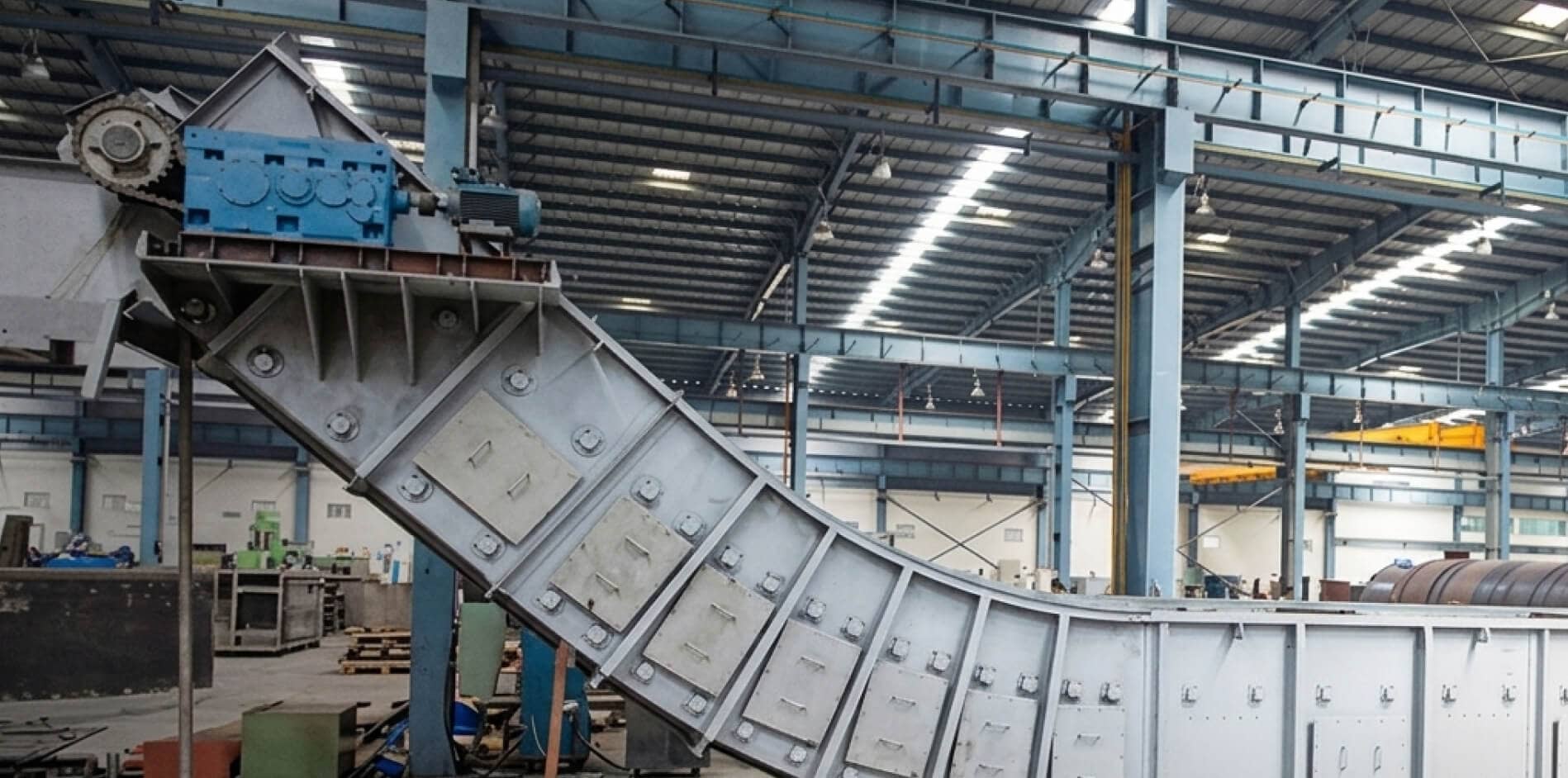 Ash handlingAsh handling systems and plants for PF and CFBC boilers: fly ash, bottom ash, dry bottom ash and slurry disposal, designed and built by Macawber Beekay.
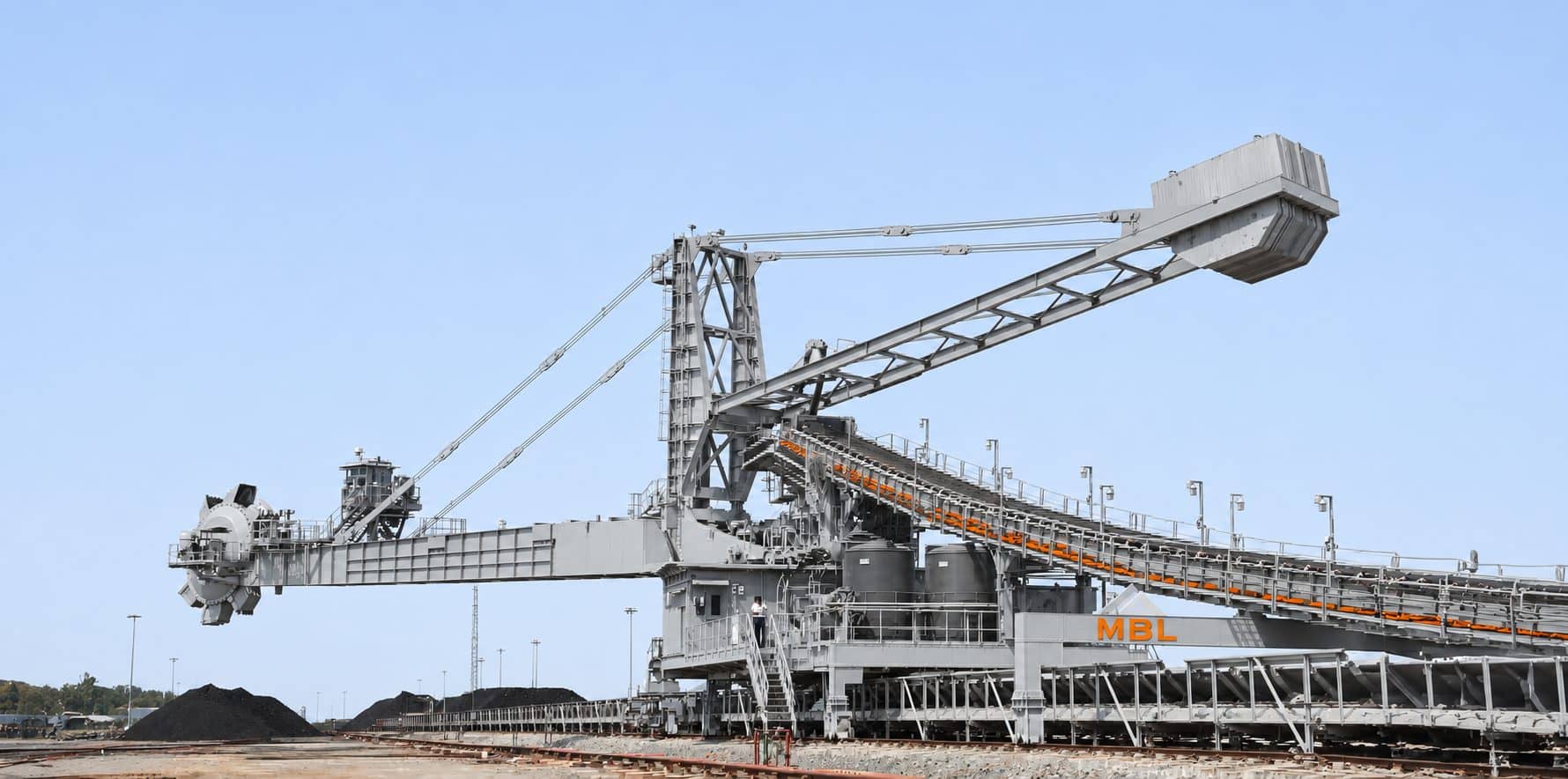 Coal handlingTurnkey coal and lime handling plants: wagon tipplers, track hoppers, feeders, crushers, screens, stacker-reclaimers, and civil, structural, electrical works.
 Green coalWaste to green coal: Macawber Beekay turns municipal solid waste into carbon-neutral green coal by torrefaction, with capacity of up to 600 T/day of waste.
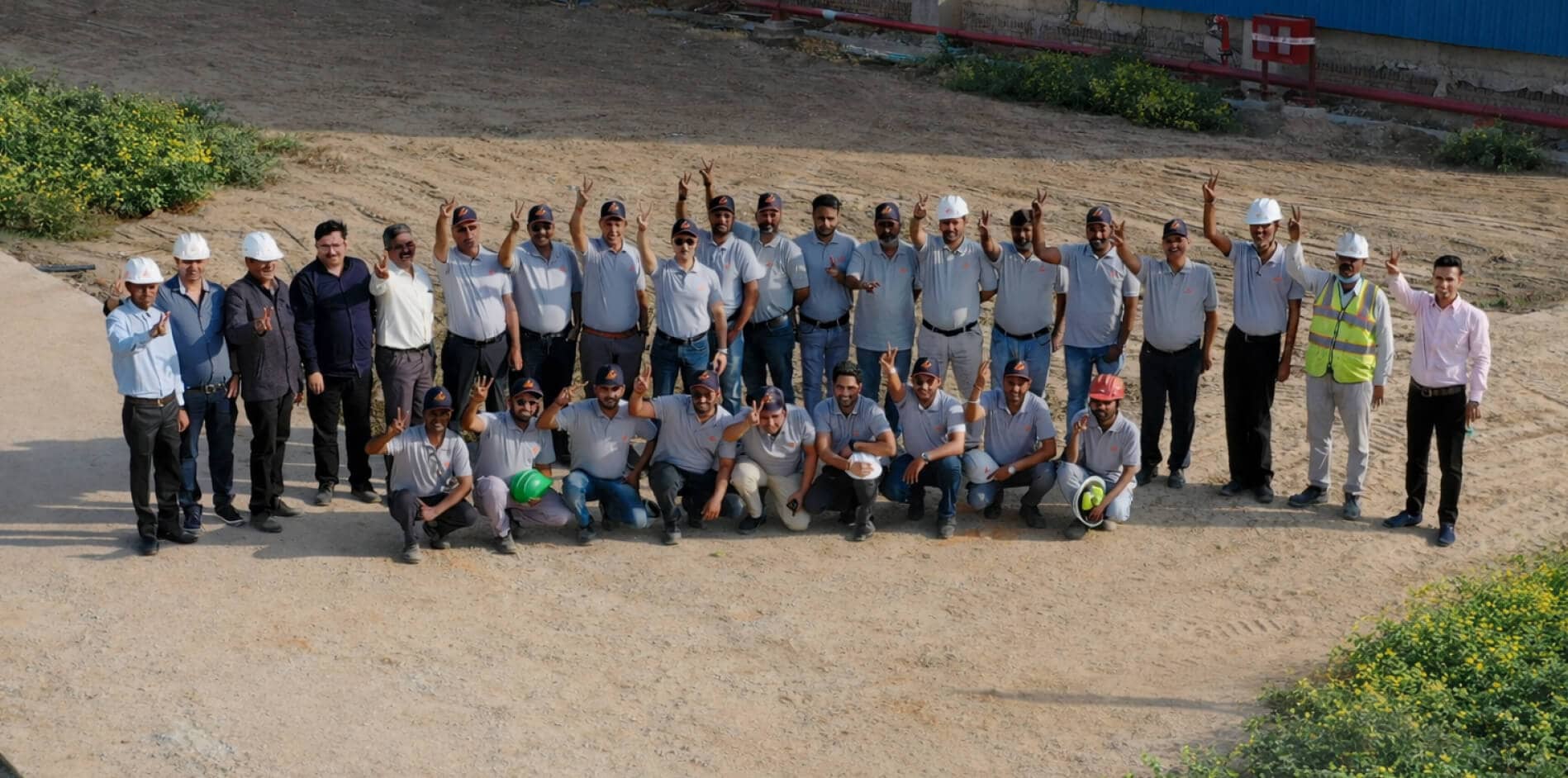 About usMacawber Beekay is a fully Indian-owned EPC company for ash, coal and bulk material handling, established in 1986, with group roots in 1918, and works at Keshwana and Kasna.
Talk to our engineers.
Planning a new plant or upgrading one? Our engineering team in Noida is ready to help.
